
How Long Do You Have to Wear Invisalign?
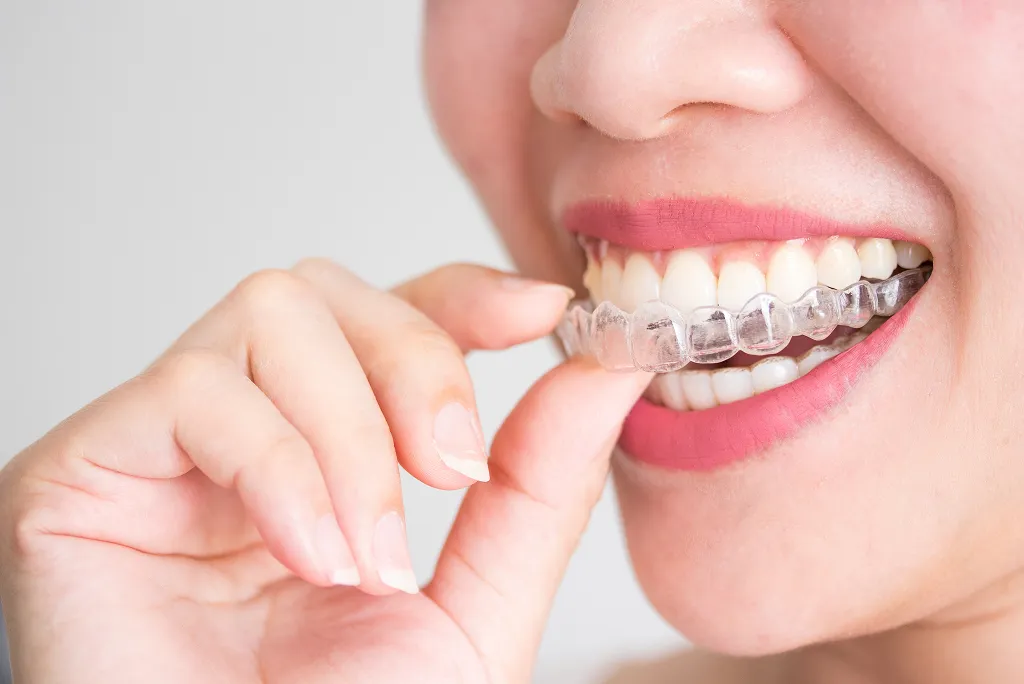
This is one of the first questions almost every Invisalign candidate asks, and it makes complete sense. You want to know what you are signing up for before you sign up. The answer is honest but nuanced: it depends on your teeth. And while that might feel like a non-answer, there is actually a lot of useful, specific information underneath it that can help you set realistic expectations.
At Schaumburg Dental Studio, we believe in giving patients a clear picture of their treatment before it begins. So let us break down how long Invisalign actually takes, what variables affect the timeline, and what you can do to make sure your treatment goes as efficiently as possible.
The Average Invisalign Treatment Timeline
For most adults, Invisalign treatment takes between 12 and 18 months. This is the range you will see most frequently quoted, and it reflects the reality for a broad middle ground of cases, where patients have moderate crowding, mild to moderate spacing, or bite issues that need addressing but are not highly complex.
Teenagers often fall into a similar range, though some cases are completed more quickly if the primary issues are relatively minor. On the shorter end, mild cases, such as very small spacing or minor crowding, can sometimes be resolved in as few as 6 months. On the longer end, more complex cases involving significant crowding, bite correction, or tooth rotation can extend to 24 months or occasionally beyond.
When you come in for your consultation at Schaumburg Dental Studio, your dentist in Schaumburg, IL will use digital scanning and planning software to map out your entire treatment and give you a specific estimated timeline based on your actual teeth, not a generic average.
What Affects How Long Your Invisalign Treatment Takes?
Several factors play a significant role in determining where on the timeline your treatment lands.
Severity of Misalignment
The degree of crowding, spacing, overbite, underbite, crossbite, or open bite is the single biggest driver of treatment length. Minor issues resolve faster. Complex malocclusions take longer. There is no shortcut around the biology of tooth movement, which is gradual by design.
How Consistently You Wear Your Aligners
This one is entirely in your hands. Invisalign aligners are designed to be worn for 20 to 22 hours per day. That means they should be out only when you are eating, drinking anything other than water, brushing, and flossing. Remove them more frequently or for longer stretches, and your teeth are not receiving the constant, gentle pressure that drives movement. Inconsistent wear is the number one patient-controlled reason treatments take longer than planned.
How Often You Switch Aligners
Your Invisalign plan includes a specific schedule for progressing from one aligner tray to the next. In most modern treatment plans, this is every one to two weeks. Falling behind on switching trays slows your overall progress. Staying on schedule keeps you moving.
Compliance with Attachments
Some Invisalign cases require small tooth-colored attachments, which are bonded to certain teeth to help the aligners grip and produce more complex movements. If attachments are damaged or come off and not promptly replaced, it can affect the efficiency of tooth movement. Let your dentist in Schaumburg, IL know immediately if an attachment comes off.
Age
While adults of any age can achieve excellent results with Invisalign, the bone and tissue surrounding teeth in younger adults tends to remodel more quickly than in older adults. This is not a dealbreaker at any age, but it is a real biological consideration that can affect pace.
Daily Wear Requirements: What 20 to 22 Hours Really Means
Let us be practical about this for a moment because we think it is important for patients to have realistic expectations going in.
Twenty to twenty-two hours of daily wear means your aligners are essentially always in. You have a window of two to four hours total, not per meal, for removal each day. Most patients find this is plenty of time to eat three meals and handle oral hygiene without feeling overly restricted. But if you were imagining a treatment where you could take the aligners out whenever it felt inconvenient, that approach will extend your treatment timeline significantly or compromise your results.
At Schaumburg Dental Studio, we find that patients who genuinely commit to the wear schedule are consistently the ones who finish on time and are thrilled with their results.
Retainers: The Part That Comes After
Once your active Invisalign treatment is complete, your teeth will have been moved into their new positions. But they are not done. Teeth have a natural tendency to drift back toward where they came from, especially in the weeks and months immediately following treatment. This is why retainer wear is not optional.
Most patients will wear their retainers full-time for the first three to six months after finishing active treatment, then transition to nighttime-only wear. At Schaumburg Dental Studio, we make this as seamless as possible and build the retainer phase into your overall treatment plan so there are no surprises.
Can Invisalign Treat My Case? What About Complex Issues?
Invisalign technology has advanced enormously over the past decade. Cases that previously required traditional braces can now often be treated with clear aligners. Mild to moderate crowding, spacing, overbites, underbites, and crossbites are all within Invisalign's range.
Extremely complex cases involving severe skeletal discrepancies or significant vertical issues may still be better suited to traditional braces or even a combination approach. Your dentist in Schaumburg, IL, will give you an honest assessment of whether Invisalign is the right fit for your specific situation.
Interested in Invisalign at Schaumburg Dental Studio?
We would love to show you what your smile could look like. At Schaumburg Dental Studio, we offer complimentary Invisalign consultations with digital scanning and a clear timeline estimate. Reach out to schedule yours today and take the first step toward the smile you have been thinking about.

Contact Us
Our staff is happy to hear from you! Fill out our simple form to schedule your next visit and experience exceptional dental care in Schaumburg.

Email: office@sdsdentist.com
Phone: 847-882-3333

Monday: Closed
Tuesday–Thursday: 9:00 a.m. to 6:00 p.m.
Friday: 8:00 a.m. to 4:00 p.m.
Saturday: 8:00 a.m. to 2:00 p.m.
Sunday: Closed

We offer comprehensive dental services for all ages. Trust us as your go-to family dental office.


