
Can people with autoimmune disease get dental implants?
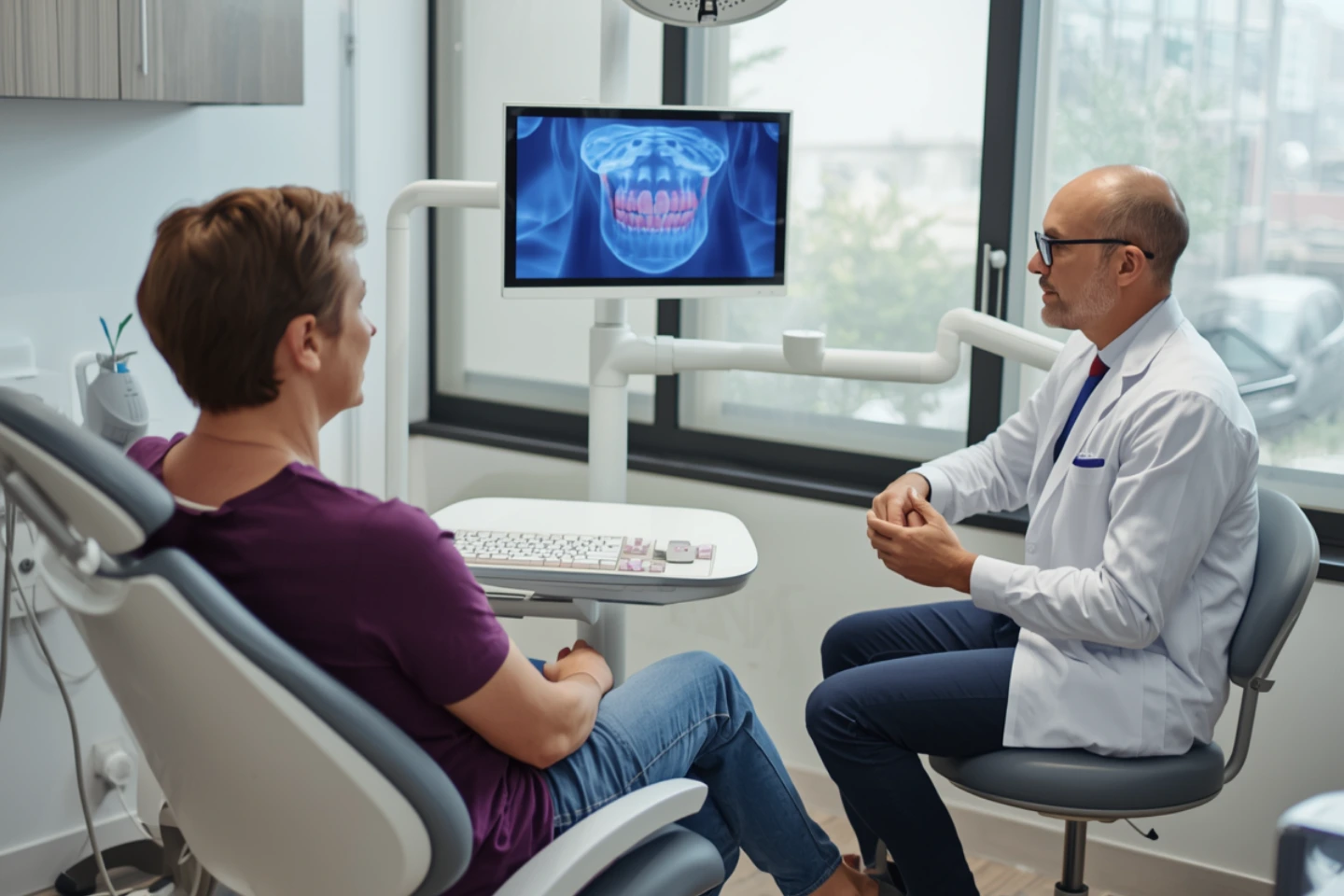
If you are living with an autoimmune disease, you already know that your body plays by a different set of rules. Whether it is Rheumatoid Arthritis, Lupus, Type 1 Diabetes, or Sjogren’s Syndrome, these conditions require you to be extra vigilant about your health. When it comes to replacing missing teeth, a common question arises: Can people with autoimmune disease get dental implants?
For a long time, many patients were told no. However, thanks to advancements in modern dentistry and a deeper understanding of systemic health, the answer is often a resounding yes. At Schaumburg Dental Studio, we believe that every patient deserves a confident smile, but we also prioritize your safety above all else.
If you are looking for a dentist who understands the intersection of autoimmune health and oral surgery, this guide is for you. We will break down the risks, the requirements, and how we can work together to make your dental implants a success.
Understanding the Connection Between Autoimmune Health and Implants
To understand why an autoimmune disease complicates things, we first have to look at how a dental implant works. Unlike a bridge or dentures, an implant relies on a process called osseointegration. This is where your jawbone actually grows around and fuses to the titanium post.
When you have an autoimmune condition, your immune system is essentially "overactive" or misdirected. It may struggle to distinguish between a foreign invader and your own healthy tissue. This can lead to a few specific hurdles in the dental implant journey.
The Challenge of Inflammation
Autoimmune diseases are rooted in chronic inflammation. If your body is already in a high state of inflammatory stress, it might struggle to trigger the healthy, localized healing response needed for the implant to fuse with the bone. At Schaumburg Dental Studio, we carefully evaluate your current inflammatory markers before moving forward.
Healing and Recovery Times
Because many autoimmune conditions affect the body’s ability to repair itself, the healing phase after surgery might take longer. What takes a healthy patient three months might take an autoimmune patient six months. This does not mean the implant will fail, it just means we need to be patient and provide extra support during the recovery.
Medication Side Effects
Many people with autoimmune disorders take immunosuppressants or corticosteroids like Prednisone. These medications are lifesavers for managing flares, but they can also suppress the very cells needed for bone healing and fighting off minor oral infections. As a dedicated dentist in Schaumburg, IL, we work closely with your rheumatologist or primary care physician to coordinate your care around your medication schedule.
The Most Common Autoimmune Conditions and Implants
Not all autoimmune diseases affect the mouth in the same way. Here is a look at how specific conditions might impact your candidacy for dental implants.
Rheumatoid Arthritis (RA)
RA often involves joint inflammation, but it can also impact the jaw joint (TMJ). Furthermore, medications for RA can sometimes lead to bone density issues. However, if your RA is well-controlled, you can usually proceed with dental implants quite successfully.
Lupus (SLE)
Lupus can cause oral sores and prolonged healing times. The main concern for Lupus patients is the risk of a "flare" triggered by the stress of surgery. We take extra precautions at Schaumburg Dental Studio to ensure the procedure is as low-stress as possible.
Type 1 Diabetes
While often categorized as a metabolic disorder, Type 1 Diabetes is an autoimmune attack on the pancreas. High blood sugar levels can severely hinder the osseointegration process. If your A1C levels are stable and within a healthy range, you are typically an excellent candidate for implants.
Sjogren’s Syndrome
Sjogren’s specifically attacks the moisture-producing glands, leading to chronic dry mouth (xerostomia). Saliva is essential for washing away bacteria. Without it, the risk of "peri-implantitis" (infection around the implant) is higher. We provide specialized oral rinses and maintenance plans for our Sjogren’s patients to mitigate this risk.
How to Increase Your Success Rate
If you have an autoimmune disease and want dental implants, you are not disqualified. You just need a more customized roadmap. Here is how we ensure the best possible outcome at Schaumburg Dental Studio.
- Systemic Stability: The most important factor is that your disease is in a period of remission or is well managed. We generally do not recommend starting the implant process during an active flare.
- Doctor Collaboration: We do not work in a vacuum. Your dentist should be talking to your specialist. We share lab results and discuss medication adjustments to ensure your body is in the "sweet spot" for healing.
- Advanced Imaging: We use 3D cone-beam CT scans to look at your bone density in high definition. This allows us to place the implant in the exact spot where your bone is strongest.
- Impeccable Oral Hygiene: Since your immune system is preoccupied, you have to be the first line of defense. This means brushing, flossing, and using any prescribed antibacterial rinses religiously.
Potential Risks to Discuss with Your Dentist
We believe in total transparency. While success rates for dental implants are high (around 95 to 98 percent for the general population), patients with autoimmune conditions may face a slightly higher risk of implant failure.
Peri-implantitis
This is a form of gum disease that attacks the bone around the implant. Because your immune response is altered, a small amount of plaque can cause a larger amount of inflammation than it would in someone else. Frequent cleanings at Schaumburg Dental Studio can help catch this early.
Delayed Osseointegration
Sometimes, the bone just takes its time. If we check the implant at three months and it isn't ready, we don't rush it. We wait until the stability is 100 percent before we place the final crown.
Schedule a Consultation at Schaumburg Dental Studio
Your health journey is unique, and your dental care should be too. If you have been told in the past that you aren't a candidate for dental implants because of your health history, we invite you to get a second opinion.
At Schaumburg Dental Studio, we take the time to listen to your concerns and review your medical history in detail. We don't just look at your teeth; we look at your whole-body health. If you are ready to explore your options for a permanent, beautiful smile, contact us today.
Living with an autoimmune disease is hard enough; you shouldn't have to live with missing teeth too. Our team is dedicated to providing a safe, compassionate environment where you can achieve the smile of your dreams. We are here to support you every step of the way.
Whether you are dealing with one missing tooth or many, Schaumburg Dental Studio has the solutions you need. We invite you to experience the difference that personalized, expert care can make. Reach out to us and let us help you regain your confidence and your quality of life.

Contact Us
Our staff is happy to hear from you! Fill out our simple form to schedule your next visit and experience exceptional dental care in Schaumburg.

Email: office@sdsdentist.com
Phone: 847-882-3333

Monday: Closed
Tuesday–Thursday: 9:00 a.m. to 6:00 p.m.
Friday: 8:00 a.m. to 4:00 p.m.
Saturday: 8:00 a.m. to 2:00 p.m.
Sunday: Closed

We offer comprehensive dental services for all ages. Trust us as your go-to family dental office.


